
Same Acne, Different Scars — Why Does This Happen? | Dr. M.A. Sandeep | Cosmetologist in RR Nagar
Have you noticed that the same type of acne can leave different scars on different people? Some develop small pits, others experience deep scars, while some are left with dark marks. The reason is that acne scars depend on how the skin responds to inflammation and heals after a breakout.
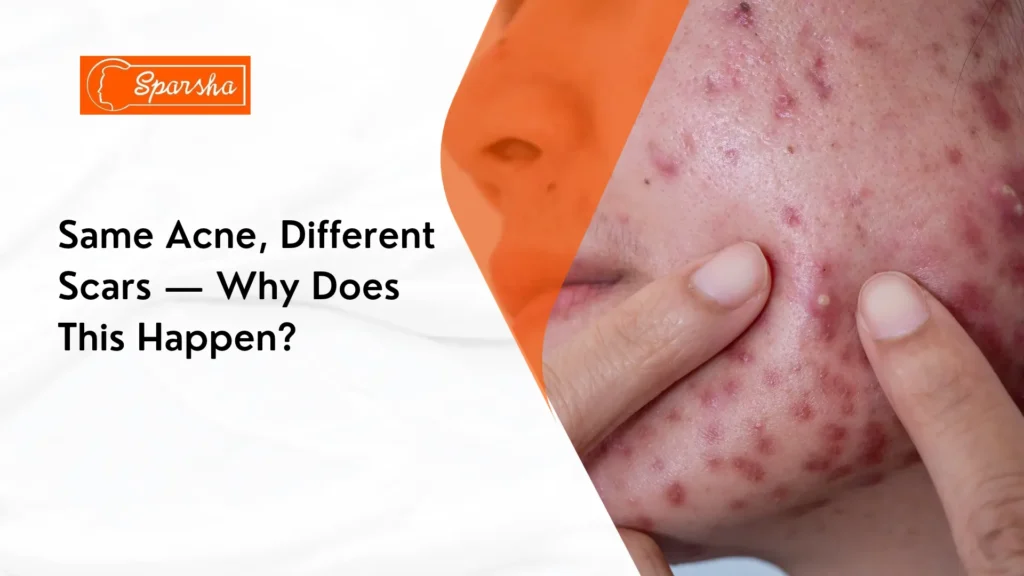
Several factors influence the type and severity of acne scarring:
- Depth of inflammation: Deep, inflamed acne can damage collagen and surrounding skin tissue, increasing the risk of permanent scars.
- Collagen production: When the skin produces insufficient collagen during healing, depressed or pitted scars may develop. Excess collagen can lead to raised scars.
- Picking or squeezing: Repeatedly touching or squeezing pimples can worsen inflammation and increase the risk of scarring.
- Skin healing: Every person's skin heals differently, which affects the appearance of marks and scars.
- Acne severity and duration: Persistent or severe acne can cause more extensive skin damage.
Acne can leave different types of marks and scars:
- Atrophic scars: Depressed scars that appear as small pits or indentations.
- Hypertrophic scars: Raised scars caused by excess collagen production.
- Post-inflammatory hyperpigmentation: Dark marks that remain after acne heals. These are not true scars and may gradually fade.
Yes. Treatment depends on the type of scar, its depth, and your skin characteristics. Options may include laser treatments, chemical peels, microneedling, or other dermatologist-recommended procedures. Early acne treatment can also help reduce the risk of future scarring.
Conclusion
Different acne scars develop because every skin type responds and heals differently. Consulting a dermatologist can help identify your scar type and determine suitable treatment.
FAQs
Deep inflammation and individual healing responses can damage collagen and lead to depressed scars.
Not always. Dark marks are often pigmentation changes rather than permanent textural scars.
Some marks fade over time, while established scars may need professional treatment to improve their appearance.
Seek advice if acne is persistent, painful, or leaving marks and scars.

